Source Child Proof Box for Food, Gifts, and Cosmetics Packaging
Compare 30 child proof box options from Chinese manufacturers featuring tinplate and paper materials. Buyers can evaluate customization, logo printing, and closure types for food, gifts, and cosmetics storage needs.
Key considerations
Products List






Comprehensive Sourcing Guide
Strategic Sourcing Guide for Child-Proof Packaging Solutions
Understanding the Technical Architecture of Child-Proof Containers
When sourcing child-proof boxes, buyers must first distinguish between the mechanical locking mechanisms and the material composition that defines the product's integrity. The market offers a diverse array of configurations, ranging from rigid tinplate containers to specialized paper-based sliding drawers. A critical observation from current product listings indicates that "Child Proof Tin Box" and "Child resistant proof lock sliding box drawer paper box" are distinct categories serving different functional needs. The tinplate variants often utilize a "Flip Cover Type" closure, which relies on a specific hinge and latch mechanism to prevent unauthorized access. In contrast, the sliding drawer designs often incorporate a "push button" mechanism, requiring a specific sequence of actions to open, thereby increasing the safety threshold for young children.
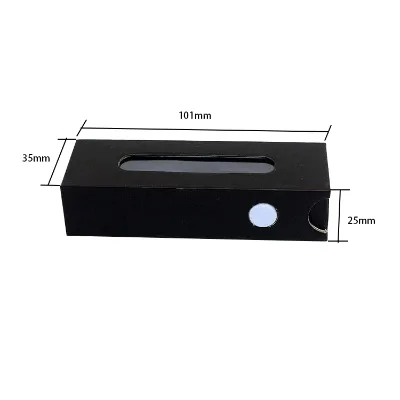
The material selection is equally pivotal. While many suppliers offer "Tinplate" as the primary material, often in "Silver," "Black," "White," or "Customized" finishes, others utilize "Coated Paper" or general "Metal" composites. The thickness of the material is a specific technical parameter that directly correlates to durability and tamper resistance. For instance, specific product models in the current supply landscape list a thickness of "0.2mm," which serves as a baseline for lightweight rigid packaging. However, for heavy-duty applications involving electronics or cosmetics, buyers should verify if the structural integrity meets the demands of the specific contents. The shape of the container is predominantly "Rectangle" or "Rectangular," designed to maximize shelf space and stacking efficiency. These geometric constraints often influence the internal volume, with standard dimensions observed in the market ranging from "10.56.82CM" to larger configurations like "505020mm" or "1006025mm."
Compliance Verification and Safety Certification Protocols
The term "child-proof" implies a rigorous adherence to safety standards, yet the specific certification status of a supplier is not universally standardized in the provided data. Buyers must understand that the mere presence of a "Child Proof" keyword does not guarantee compliance with international safety regulations such as those set by the Consumer Product Safety Commission (CPSC) in the United States or the European Union's EN 14350 standards. The supplied facts mention "S M L" as a product standard and "Custom" as another, but these likely refer to size classifications rather than safety certifications.
Therefore, the procurement strategy must prioritize direct verification of compliance. Buyers should explicitly request test reports from the supplier that demonstrate the packaging's ability to withstand the testing protocols defined by relevant regulatory bodies. These tests typically involve a panel of children aged 52 months and under attempting to open the container within a specific timeframe. Without a specific certification document in hand, the buyer cannot assert that the product is legally compliant for sale in regulated markets. Furthermore, the "OEM/ODM" capability of a supplier is a strong indicator of their flexibility in meeting custom compliance requirements, but it does not substitute for the mandatory safety testing of the final product. The buyer must ensure that the "Customized Color" and "Customized Logo" options do not compromise the structural integrity required for safety compliance.
Cost Drivers and Economic Factors in Procurement
The pricing of child-proof boxes is influenced by a complex interplay of material costs, customization levels, and order volume. The observed price range in the market spans from $0 to $100 USD, a wide variance that suggests significant differences in unit cost based on the complexity of the design and the scale of production. The "MOQ" (Minimum Order Quantity) ranges from 1 to 5000 units, indicating that suppliers cater to both prototyping needs and large-scale industrial procurement.
Material choice is a primary cost driver. "Tinplate" generally commands a different price point compared to "Coated Paper" or standard "Metal" composites due to the raw material costs and the manufacturing processes involved, such as "Embossing" or "Offset printing." The complexity of the closure mechanism also impacts cost; a simple flip cover is less expensive to manufacture than a multi-step sliding drawer with a push-button lock. Additionally, the "Surface Handling" techniques, including "Gravure Printing," "Laser Cutting," "Bronzing," and "Uv Printing," add layers of processing that increase the unit price. Buyers should note that "Customized Color" and "Customized Logo" often incur setup fees or higher per-unit costs, especially if the design requires multiple colors or intricate details.
The "Place of Origin" also plays a role in the final landed cost. Products originating from "Anhui, China" or "Guangdong, China" may have different logistics and tariff implications depending on the buyer's location. While the specific lead times are not provided in the source data, the complexity of the "prod_packing" (e.g., "Carton Box" vs. "Packaging in Cartons") can affect shipping efficiency and volume discounts. Buyers should analyze the total cost of ownership, including shipping and potential duties, rather than focusing solely on the unit price.
Typical Applications and Functional Use Cases
The versatility of child-proof boxes makes them suitable for a wide range of industries, primarily driven by the need to secure hazardous or valuable contents. The primary application areas identified in the market data include "Food," "Gifts," "Electronic," and "Cosmetics." For the food industry, these containers are often used for packaging items that require protection from moisture or unauthorized access by children, such as certain confectioneries or supplements. The "Food" usage category often necessitates specific material safety certifications to ensure no chemical leaching occurs.
In the electronics sector, child-proof boxes are essential for packaging small, valuable components like batteries, memory cards, or USB drives that pose a choking hazard or a risk of ingestion. The "Rigid Boxes" category is particularly relevant here, as it offers the necessary protection for delicate items. The "Cosmetics" industry utilizes these containers for high-end products, where the "Carton" packaging and "Embossing" surface handling add a premium aesthetic appeal while ensuring safety. The "Gifts" application leverages the "Cartoon" style and "Customized" designs to create attractive, safe packaging for children's products or gifts intended for households with young children.
The "Storage/Food Packaging/Gift Boxes" usage category highlights the dual function of these products as both protective containers and aesthetic packaging. The "Handle" accessory mentioned in some product specifications suggests that portability is a key consideration for certain applications, such as gift sets or travel-sized cosmetic kits. The "Two-Sided" printing capability allows for comprehensive branding and information display, which is crucial for compliance labeling in the food and cosmetic sectors.
Supplier Evaluation and Operational Due Diligence
Selecting the right supplier requires a thorough evaluation of their capabilities beyond the basic product listing. Buyers should prioritize suppliers who demonstrate a clear capacity for "Custom Order" acceptance and "OEM/ODM" services. The presence of specific product models like "24Flora07-003" or "24SEAN07-006" indicates a catalog of existing designs, but the ability to modify these for specific needs is a more valuable trait. Suppliers located in "Guangdong" or "Anhui" are known for their manufacturing clusters, but the specific factory's quality control processes are the true differentiator.
Buyers must verify the supplier's experience with "Child Proof" mechanisms. This involves asking for case studies or references from previous clients in the same industry. The ability to handle "Logo Printing" and "Customized Logo" requests is standard, but the quality of the print, whether via "Offset printing" or "Gravure Printing," must be assessed. The "Printing Page" being "Two-Sided" is a technical specification that should be confirmed to ensure full branding coverage. Additionally, the "prod_packing" method, whether "Carton Box" or "Packaging in Cartons," should be evaluated for its ability to protect the product during transit, especially given the "Weight" of the items is often less than "0.5 kg," making them susceptible to damage if not packed correctly.
Quality Control and Inspection Standards
Quality control for child-proof boxes must focus on both the mechanical function of the locking mechanism and the physical integrity of the packaging. The "Closure Type" must be tested repeatedly to ensure it does not wear out or become loose over time. A child-proof box that fails after a few openings is a significant liability. Buyers should implement a rigorous inspection protocol that includes functional testing of the "Flip Cover" or "push button" mechanisms on a sample basis.
The material quality is another critical area. For "Tinplate" products, the "Thickness" of "0.2mm" should be verified using calipers to ensure it meets the specified tolerance. Any deviation could compromise the structural strength. The "Surface Handling" processes, such as "Embossing" or "Laser Cutting," must be inspected for consistency and precision. Defects in these areas can lead to sharp edges or incomplete seals, which are safety hazards. The "Color" consistency, whether "Silver," "Black," "White," or "Customized," should be checked against the approved sample to ensure brand alignment.
Furthermore, the "Standard" of "S M L" or "Custom" dimensions must be strictly adhered to. Variations in size can affect the fit of the closure mechanism, potentially rendering the child-proof feature ineffective. Buyers should also inspect the "prod_packing" to ensure that the "Carton" boxes are sturdy enough to prevent crushing during shipping. The "Single package size" of "15X10X5 cm" or similar dimensions should be consistent across the batch to ensure efficient palletization and storage.
Long-Term Procurement and Supply Chain Resilience
Sourcing child-proof boxes is not a one-time transaction but a long-term partnership that requires strategic planning. Buyers should consider the scalability of the supplier's production capacity. The "MOQ" range of 1 to 5000 suggests flexibility, but buyers must ensure that the supplier can ramp up production during peak seasons without compromising quality. The "Lead time" is a critical factor, although not explicitly provided in the data, it should be a key negotiation point.
Sustainability is becoming an increasingly important consideration in the packaging industry. While the current data does not explicitly mention recyclability, buyers should inquire about the environmental impact of the "Tinplate" or "Coated Paper" materials. The "Customized Color" options often involve inks and coatings that may have environmental implications. Buyers should seek suppliers who are willing to discuss sustainable alternatives or certifications related to environmental management.
Finally, the "Brand Name" association, such as "ROCKANDROLL" mentioned in some listings, indicates that some suppliers may offer white-label or private-label services. Buyers should evaluate the supplier's willingness to protect their intellectual property and maintain confidentiality regarding their branding and design specifications. The ability to handle "Custom Order" requests with a high degree of customization ensures that the buyer can maintain a unique market position while adhering to strict safety standards. By focusing on these long-term factors, buyers can build a resilient supply chain that supports their business growth and safety commitments.
FAQs
What materials are used for child proof boxes?
Child proof boxes are primarily made from tinplate or coated paper. Some variants use general metal composites, with thicknesses around 0.2mm to ensure structural integrity while maintaining a lightweight profile under 0.5 kg for easy handling.
How do child proof boxes secure contents?
These boxes secure contents using mechanisms like flip cover types or sliding drawers with push buttons. The closure requires specific sequences to open, preventing unauthorized access by children while protecting food, electronics, or cosmetics inside.
Can suppliers customize logos and colors?
Yes, suppliers accept customized logos and colors including silver, black, white, or custom options. Customization is widely available through OEM and ODM services, allowing buyers to tailor the appearance and branding to their specific product needs.
What are the standard dimensions for these boxes?
Standard dimensions vary by model, ranging from small sizes like 10.5 by 6.8 by 2 cm to larger configurations such as 50 by 50 by 20 mm. Specific models also exist in rectangular shapes to maximize shelf space and stacking efficiency.
Which printing techniques are used on these boxes?
Manufacturers use offset printing, gravure printing, laser cutting, bronzing, and UV printing for surface handling. Many boxes feature two-sided printing capabilities to ensure comprehensive branding and information display on the exterior surfaces.
What is the minimum order quantity for these boxes?
The minimum order quantity ranges from 1 unit for prototyping up to 5000 units for large-scale procurement. This flexibility allows buyers to start with small custom orders or scale up production based on their specific business requirements.